
ONEWake Assembly
April 11, 2026
I envision a Raleigh where every person has a place to live that they can comfortably afford. I know you share that vision. We are united in our efforts to turn that vision into a reality. Your being here to today tells me that you are engaged and you want to understand the full picture. The information below is a small step toward sharing that full picture with you. I hope it will act as a doorway to further conversation.
ONE Wake’s Question for Me
-
I am not able to commit to a bond of that size for the November ballot, but I am willing to commit to new tools. There are a few reasons for this. The primary reason is that a larger bond is not likely to increase the number of new affordable homes we are producing in any given year. We worked closely with our staff, who are professionals in this field. We asked them in several different ways “What could you imagine if you had more money”.
Due to the bottlenecks inherent in the affordable housing world, such as applications that only open twice per year, and the level of vetting needed for each project, there is just only so much that can be moved through the process in a particular year. Our staff assessed and has determined that simply adding more money to the pot will not increase the amount of new homes we can open up for families in a given year.
However, while more money may not be the answer at this moment, new tools are always helpful. We have precious few tools in our toolkit to provide affordable housing, but this bond will come with a new method of providing truly mixed income housing. We anticipate allocating roughly $20M to a revolving loan fund that will help to build truly mixed-income projects (an area where we fall short today). These new buildings will be owned by the Housing Authority, so the affordable units will remain affordable in perpetuity. And the loans will be repaid so that future projects can be funded in the same manner. The fund becomes self-sustaining.
This new revolving loan fund is one way we’re showing that we understand the scale of the problem and continue to do everything in our sphere of control to address it.
-
The Randleigh Tract offers both challenges and opportunities at the moment . At the point when the challenges are cleared, I’m happy to assess the suitability of the land for affordable housing.
Currently the property is jointly owned by both the city and the county. Any movement on the parcel is largely dictated by NC DOT and the completion of 540, which we think will be in 2028.
Once they finish 540, the city and the county will divvy up what is left. Some of the City land will be used for a fire training center.
I am open to exploring whether the remainder can be used for affordable housing. Some considerations would be: is this land close enough to amenities like schools, grocery stores and parks? How would the quality of life for the new residents be impacted by living right next to a Fire Training Center? For instance, will they be exposed to chronic siren noise due to the driving pad for fire truck practice.
If professional experts tell me that the challenges can be overcome, then I am happy to use it for housing. However, if they say that we would be saddling vulnerable residents with additional quality of life issues, then I may change my mind.
-
We will provide this list. If you don’t wish to wait this long, it is available through self-service on iMAPS when you enter the City of Raleigh as property owner. (https://maps.raleighnc.gov/imaps/)
It is important to note that not all properties owned by the City are suitable for housing. Some land we own is wetlands or floodplains, others are steep slopes that we purchase to mitigate erosion.
-
The City regularly puts out Request for Proposals on City owned parcels. We welcome proposals that provide ambitious visions of what can be done with our limited land and budget. I would love to see ONE Wake win a future proposal.
I am happy to meet with ONE Wake to discuss what is needed to put forward a compelling application. Ultimately, we are a government and these RFPs are a competitive, transparent process. The proposals are evaluated by a committee of experts who assess a number of factors, such as the financial solvency of the organization and their track record on similar development projects.
It would be corrupt for me to commit that any particular organization would win an RFP; but I am happy to meet to brainstorm and share upcoming opportunities.
-
I am always happy to meet with people and organizations invested in our communities. Saint Augs is an important pillar of Raleigh’s history. I want her to be around and thriving for generations to come. To be clear, my commitment to meet is coupled with an understanding of the very real budgetary challenges we (The City) are facing in the upcoming years. I am always happy to meet, brainstorm, and collaborate.
1,000 Boring Meetings
A mentor of mine once said that between you and the world you want, is 1,000 boring meetings. We share a vision for Raleigh where every resident lives in a clean, safe home within their budget.
Between today and us accomplishing that vision together, we’ve got to slog through those meetings. Please attend City Council meetings, not just for the public comment period, but for the business items. Please read our City budget and share how you would allocate resources. Prior meetings can be watched on our YouTube channel -
You can also attend meetings for the Wake County Commission, Raleigh Housing Authority, and the House Select Committee on Property Taxes. These agencies are all interconnected in their work on building affordable housing.
Interconnected Work
Policy makers at every level have a part to play in helping housing costs come down and enabling folks to stay in their homes. To accomplish our vision of a world where everybody is comfortably housed, we need all policy makers doing their part. You can ask your elected officials:
Congress - raise the federal minimum wage, limit corporate ownership of housing, prevent unpredictable tariffs, offer federal lands for development of housing
NC General Assembly - raise the state minimum wage, enhance the housing trust fund, close the Blue Ridge Tax Loophole, offer state owned land for development of housing
Attorney General - challenge landlords who engage in unlawful rent setting
County Commission - fund legal assistance for eviction prevention, assist small municipalities in affordable housing work
City Council - fund affordable housing projects, fast track projects through the permitting process, acquire property that can be used for affordable housing
The wake in ONE Wake
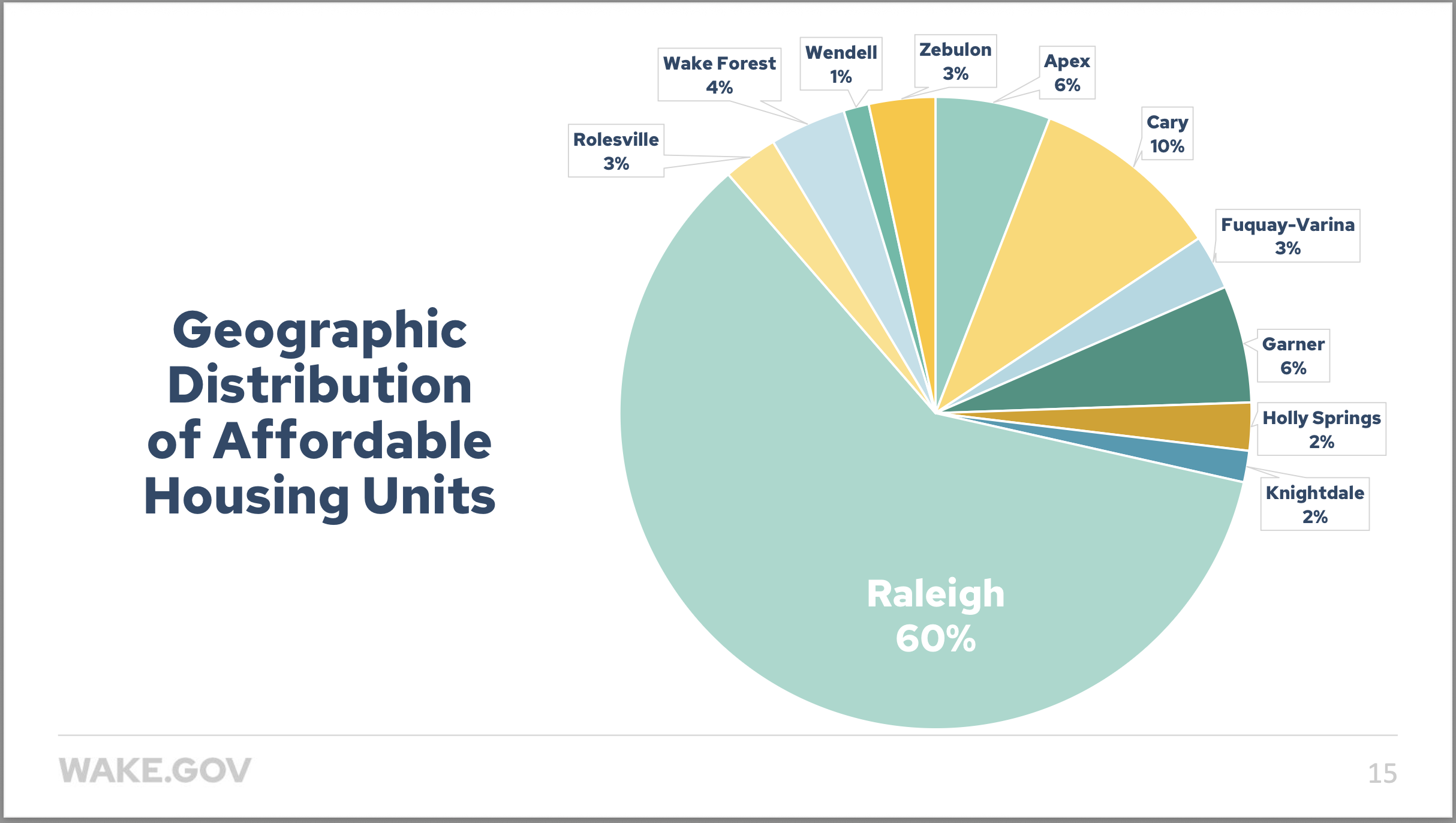
The City of Raleigh is home to about 41-45% of the population of the larger Wake County. Yet, we have about 60% of all the affordable housing units in the county.
Elected officials and staff in Raleigh remain committed to the work of providing affordable housing. We would love to see all municipalities in Wake County develop both Affordable Housing Plans and Affordable Housing Funds.
What We’ve Done So Far
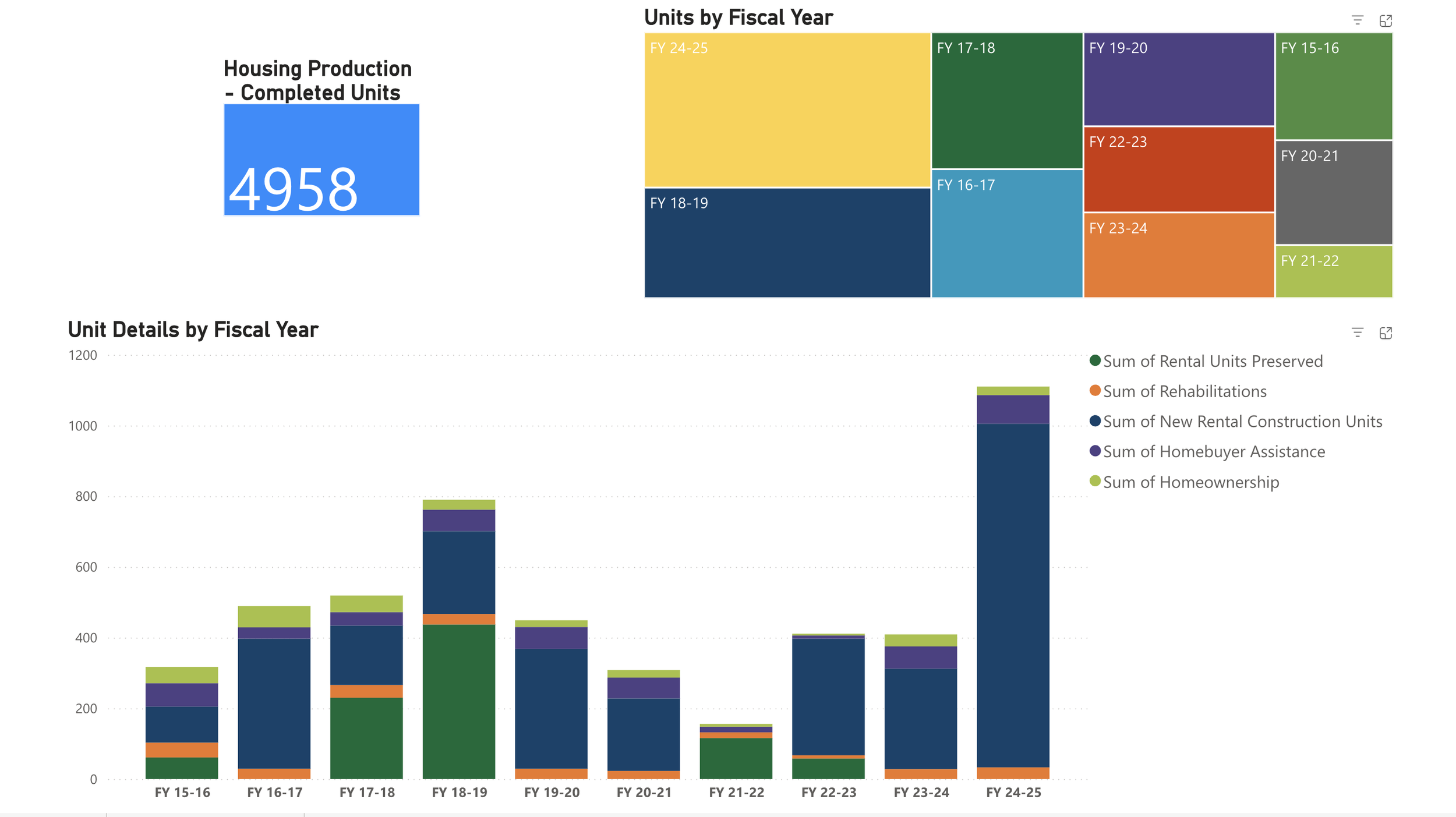
We acknowledge that the scale of the need for affordable housing is enormous. When the need is great, it is easy to forget how much has been done already. The City of Raleigh offers a dashboard that illustrates the number of homes built over the last ten years. You can find it here.
We have been steadfast in retaining our “Penny For Housing” which ensures stable funding through the general fund, along with our Bond Funds. We launched a pilot program to house our homeless neighbors and decommission encampments. The pilot has been successful and we look forward to continuing it.
A Bleak Budget
When I was a waitress, I planned my budget around what I expected to make assuming I had a certain schedule and assuming a normal level of business. If I got scheduled for a bunch of Mondays, I made less than months where I got scheduled for Fridays and Saturdays. In the months where I made less, I had to evaluate whether I’d get a haircut or repair my car, or put those things off to a future month.
Similarly, the City of Raleigh plans a budget around how much we expect we’ll bring in through property tax, sales tax and fees each year. For the first time in recent memory, we are not likely to bring in the amount of taxes we expected to. This is largely due to a property tax loophole allowing some apartment complexes to claim property tax exemptions. This loophole can only be closed by the NCGA.
Additionally, uncertainty at the federal level also impacts the City. Wars that cause the price of gas to rise, mean that it costs more to fill up our fire trucks and garbage trucks. Tariffs impact the cost of materials like concrete, steel and computers, which we use to provide public infrastructure.
You can hear this straight from our Budget Director in our most recent budget work session -
The fiscal environment is going to be a challenge in the coming years. We are having to make difficult choices about whether and how to raise taxes, how to maintain services amid rising costs, and more. We are also mindful that other elected bodies are expected to put bonds on the ballot that will likely come with tax increases. This full picture factors into how we consider the bond we place on the ballot in the fall.
Funding Layer Cake
City Bonds funds are not the only funds that create affordable housing. Most affordable housing is built with a layer cake of funding sources. The Low Income Housing Tax Credit it the primary source of funding for the vast majority of affordable housing. This is the biggest layer of the cake, and is operated at the state level. Here are the other common layers:
LIHTC
City Funding
County Funding
Bank Loans
Fundraising (maybe)
Projects built with this approach tend to have similar characteristics. They tend to be 3-4 story, walk-up apartments with surface parking. They tend to be about 160-250 units. The incomes of the residents can be a range, but have to average out to 60% AMI (that’s about $65,000 of household income). Projects have to meet certain criteria, such as being near jobs, schools, and grocery stores.
The Nehemiah Project utilizes this same layer cake to develop their projects. I was happy to travel on my own dime to visit the Nehemiah Project with ONE Wake leadership. I was comforted that their tools are largely the same as ours. In their three decades of work, they’ve built 4,900 homes. The 4,900 units built in the City of Raleigh in the past decade were undoubtedly influenced, and made easier, by the trailblazing of the organizers in Brooklyn.
I always learn the most by hearing from residents directly. Will you tell me a bit more?
What Do You Think?